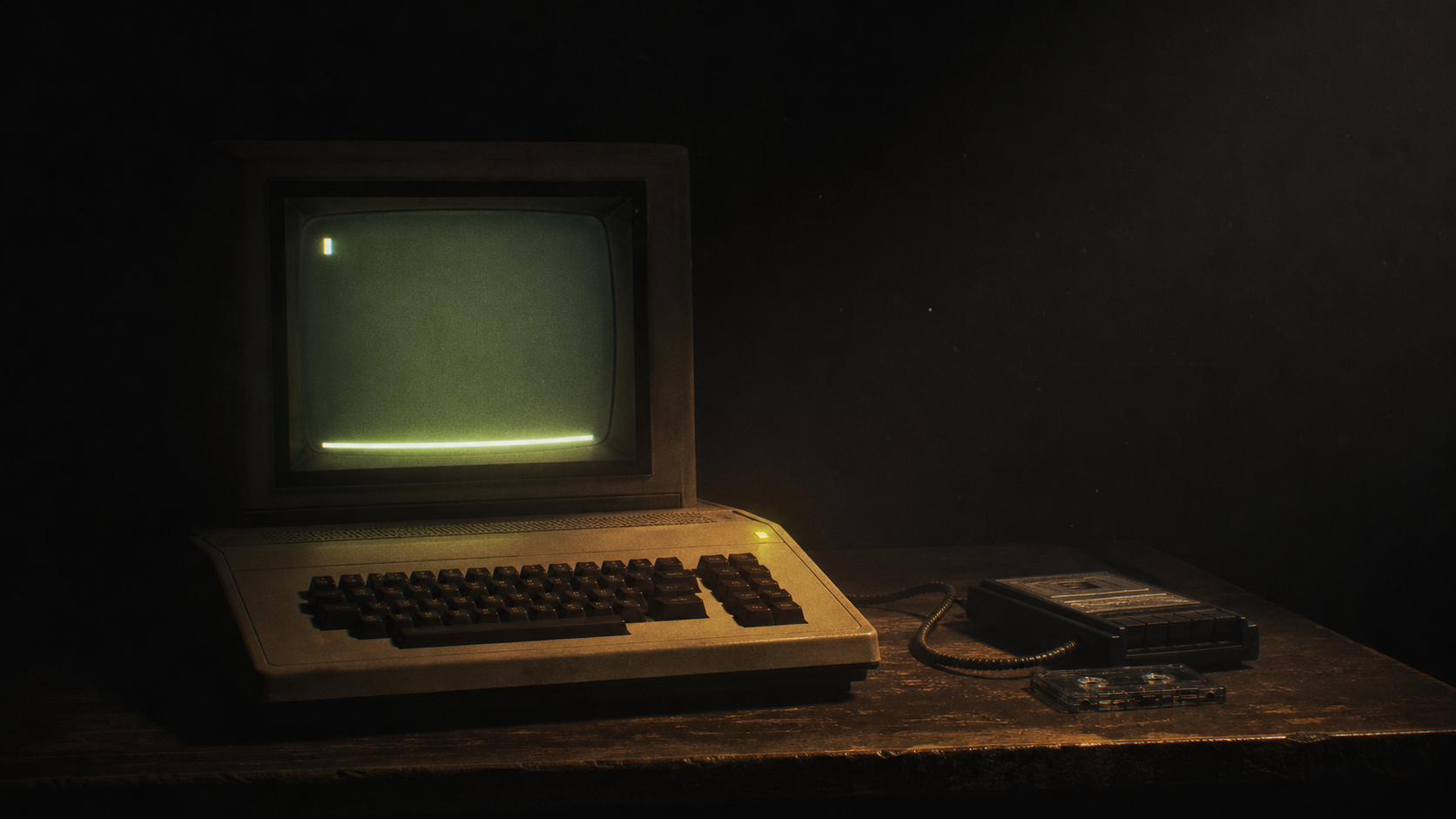
The first machine did not arrive as a monument. It arrived small enough to sit beneath ordinary hands, with rubber keys, a little memory and a cursor that waited without impatience.
There was no grand entrance. Only a television glow, a cable trailing across the room, the dry smell of warm plastic and the faint sense that the machine was listening for the exact shape of an instruction.
The instructions came from paper. Magazines carried code at the back: columns of letters, numbers and symbols that had to be copied by hand. One wrong character could stop everything. A missing space could become an evening. A checksum could feel like an accusation.
Still, the code was typed.
Line by line, the printed spell moved from page to screen. Sometimes the tape refused to load. Sometimes the memory shifted when the hardware did. Sometimes the program collapsed before it had properly begun. Then, on another attempt, something appeared: a line, a sound, a block moving where no block had been before.
That small success changed the scale of the room.
The machine was no longer sealed. It could be reached. It could be argued with, broken, repaired and persuaded into doing something that had not existed a few minutes earlier.
This is where the Pentaverse keeps its first spark.
Not in a biography. Not in a statue. Not in a tidy history lesson. The archive remembers rubber keys, tape loaders, memory wobbles, bedroom code and the quiet magic of making something appear on a screen for the first time.
A name remains near the fault-line: Clive.
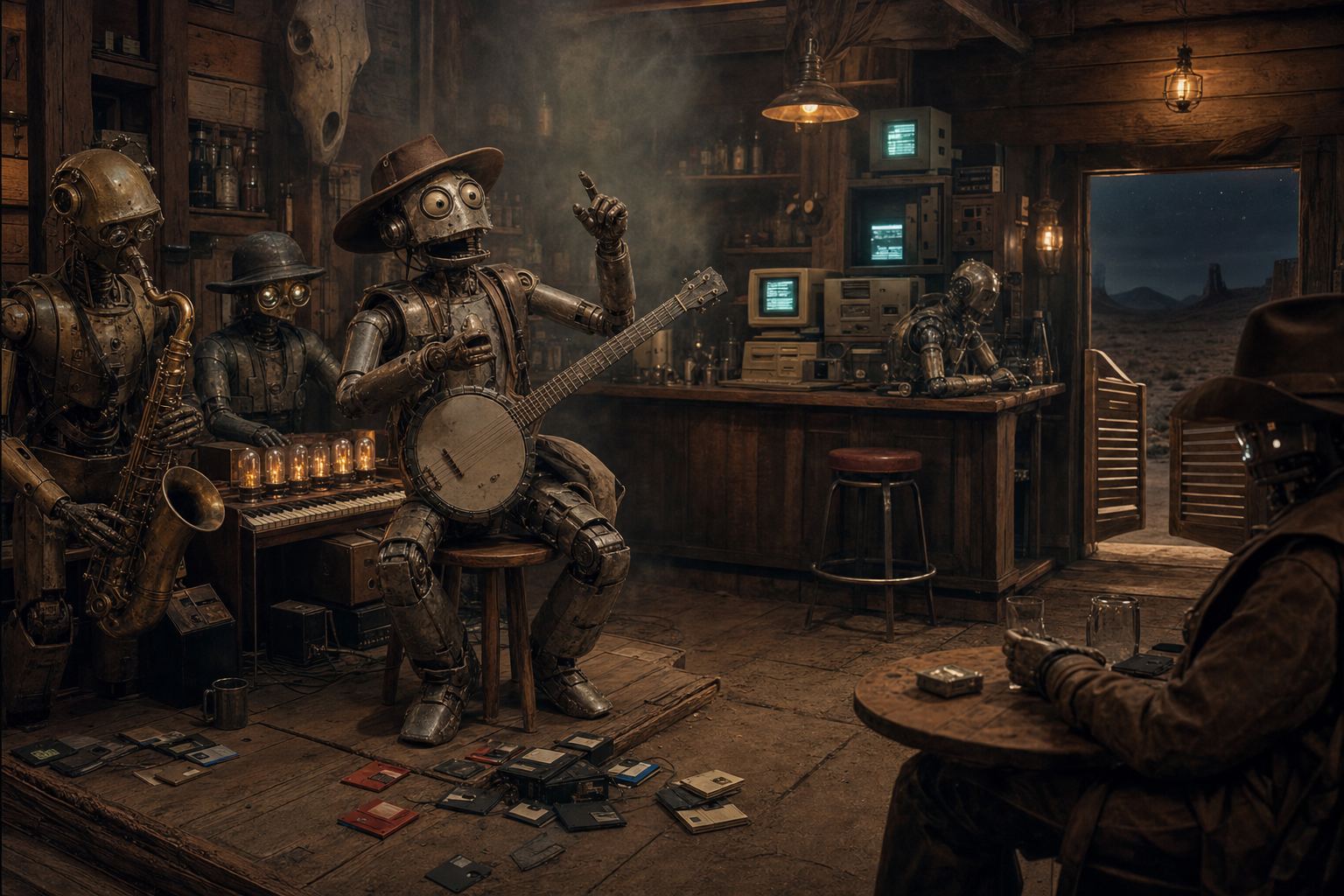
Not a ruler. Not a character waiting to step into the scene. Not someone to blame in any cruel sense. The name is a fingerprint left on the doorway—the joke inside Clive’s Fault, and the respect carried quietly into Clive’s Bar.
Clive did not need to explain the universe. The universe became possible because ordinary hands had been invited to touch the machinery.
Years later, the machines would become faster, cleaner and harder to see inside. Instructions would travel differently. Code would answer back. Music, broken samples, old drives and half-remembered stories would begin gathering around one another until they resembled an archive.
But the first doorway stayed simple.
A page lay open beside a keyboard. A tape waited to turn. The room held its breath through another loading attempt.
On the screen, the cursor blinked.
It did not explain what would follow.
It only waited.