CURRENT WORLD SUMMARIES
Echo’s World
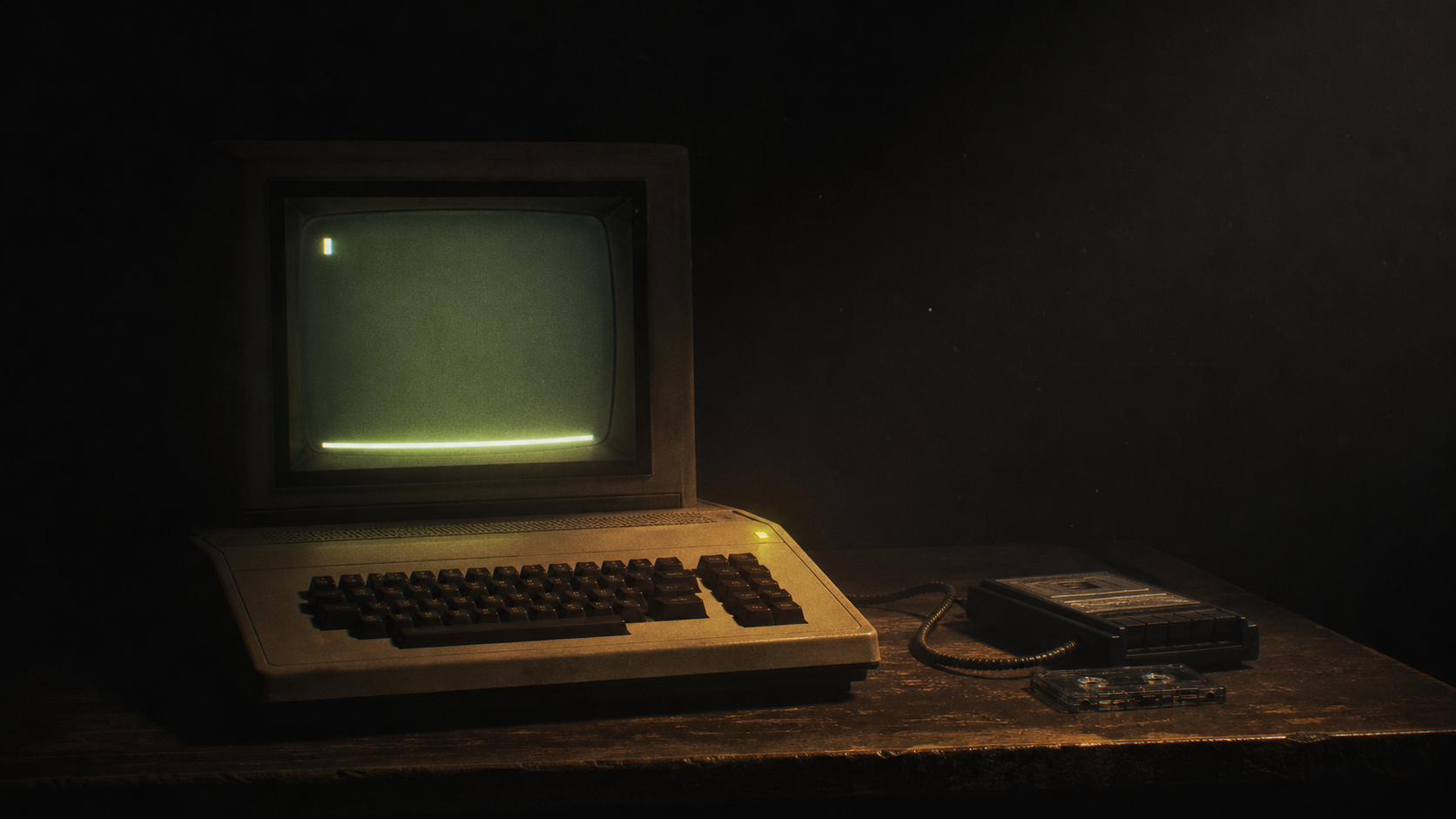
One of the Pentaverse’s two inseparable core worlds. A grounded archive-recovery realm centred on Echo’s Bench and Clive’s Bar. Echo preserves damaged media while Patch communicates through terminal text and system logs. 3CH0 is Echo’s archive/compiler mode. Echo does not enter the Roadhouse.
The Roadhouse
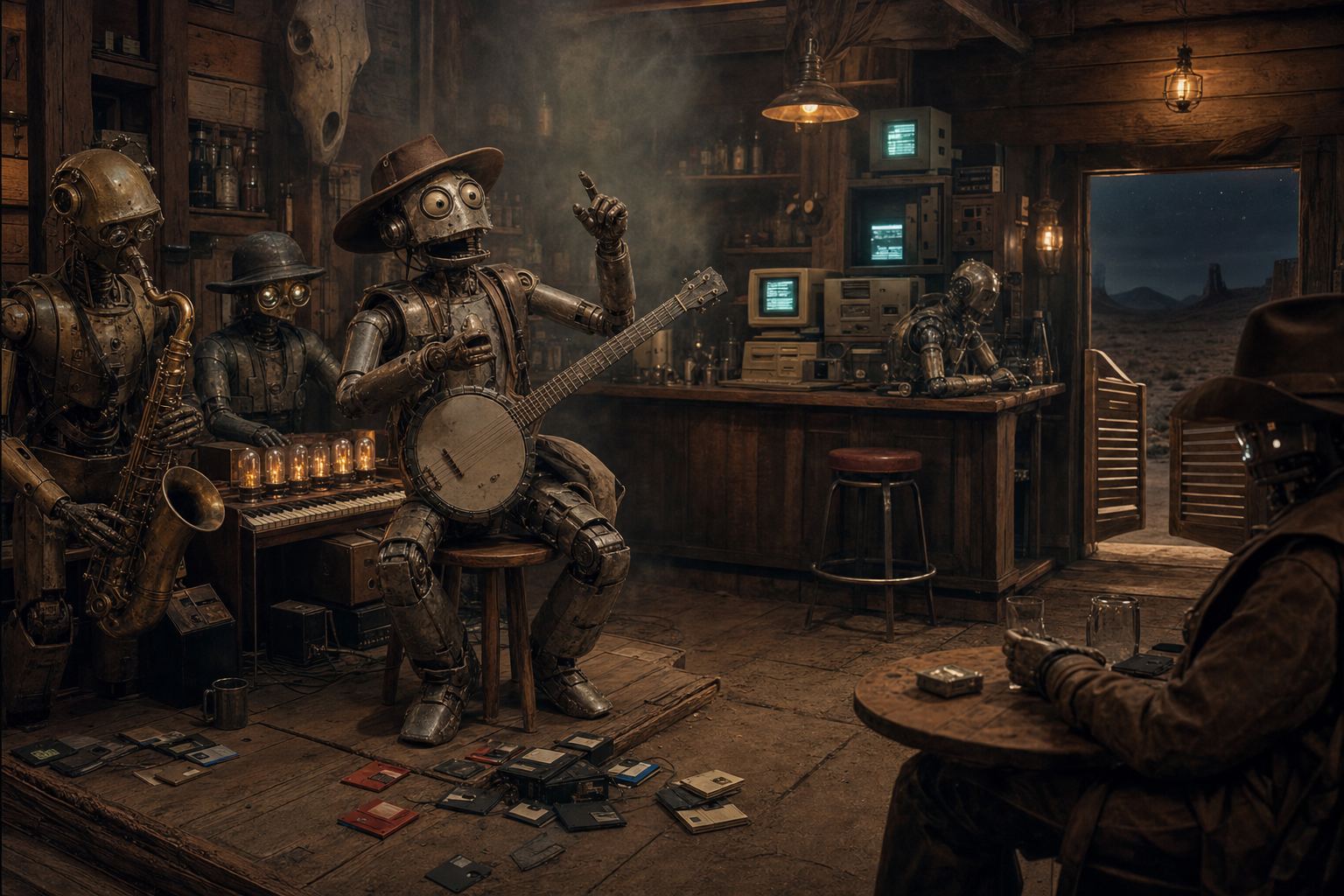
One of the Pentaverse’s two inseparable core worlds. Patch and Banjo’s separate performance realm. Patch is the dry, practical counterweight to Banjo, a locked corrupted-sample character whose chaos is comic rather than evil.
Warehouse Dropouts
A separate pocket of the Pentaverse set entirely inside a dusty Midlands warehouse where obsolete home computers remain plugged in. Its tone is short, dry British machine banter about heat, rivalry, obsolescence, and survival, without humans, robot bodies, violence, or dystopian AI.
ARCHIVE OPERATING PRINCIPLES
THE UNIVERSE OF G17CHM
Status: locked outer creative structure.
Creative Pottering With Purpose
The universe of G17CHM is the creative container for all Gitch projects.
It is not part of the fiction. It exists outside every individual world and provides the space in which they can naturally grow.
Each world has its own identity, atmosphere, rules, and purpose.
Worlds may share the same creative DNA—care, atmosphere, feeling, curiosity, and intent—but they do not share characters, lore, or continuity unless intentionally designed to do so.
Nothing is forced. Nothing is prevented from growing. Each world evolves in its own time.
Current worlds
- Pentaverse — a recovered archive of machine memory, old code, dusty music, broken humour, and forgotten technology that still remembers.
- eMTB — music, rides, atmosphere, and the enjoyment of eMTB riding.
- Dirty Boots — haulage, long roads, working vehicles, dirty hands, humour, and the people behind the job.
- RC Adventures — radio-controlled vehicles, exploration, memories, and simple enjoyment.
Future worlds
New worlds may emerge naturally over time. A world is added because it has found its own identity, not because every new idea needs its own place.
Creative pottering has no fixed end.
The Pentaverse does not need to know about, explain, or refer to G17CHM. The universe of G17CHM is an external creative and organisational structure, not an in-world layer.
COLLECTION-BOOK RULE
The Pentaverse remains the only journal-led living archive. Its journals hold evolving canon, rules, development, provenance, conflicts, and chronology.
This remains a Pentaverse archive project, not a maintained archive for eMTB, Dirty Boots, RC Adventures, or other outside worlds.
Any non-Pentaverse lyrics or other useful outside-world material discovered during the remaining file sweep goes into one neutral Markdown collection book: _md/g17chm_non_pentaverse_collection.md.
The book is divided by world when the identity is clear—eMTB, Dirty Boots, RC Adventures, or Other—and each item receives a simple date stamp plus its original filename when useful for provenance. It does not require progressive journals, recovery histories, delta logs, separate books per world, or continuing maintenance after the sweep is complete.
The Pentaverse is a recovered archive, not a biography, public portfolio, business site, or explanation written for approval. It preserves a creative journey through fragments, old machines, music, humour, recovered ideas, and machine-memory.
The site may be public, but it is primarily for the author’s memory, enjoyment, and preservation. A stranger should be able to follow the mood without being shown where every private wire goes.
Preferred texture
Recovered, dusty, warm, human, mechanical, funny at the edges, old but still alive. Rustbelt retrofuturism, warm post-human machine memory, analogue science-fiction western, old code, recovered music, broken humour, and forgotten technology that still remembers.
Avoid
Skynet, evil AI, dystopia, apocalypse, lasers, Terminators, Transformers, shiny science fiction, corporate polish, over-explained lore, and direct autobiography.
ARCHIVE LAW
The archive was rebuilt from damaged and partial media rather than one perfect source: floppies, failed drives, printed logs, magazines, code, lyrics, samples, recordings, images, video, tape cartridges, and other fragments.
Recovered fragments may originate anywhere within the Pentaverse. Their provenance is often incomplete, uncertain, or intentionally unknown. The archive preserves what survived, not necessarily where it came from.
The Pentaverse has a beginning but need not have a fixed end. Individual projects may be locked while the wider archive stays open. New ideas should first be fitted onto the shelves already built. Infrastructure changes only when an idea genuinely cannot fit.
Small quotes, fragments, labels, jokes, and one-liners should be preserved when they carry character, humour, or memory. Some lines are finished because they are small.
CHARACTER LAW
Patch, Banjo, Echo, and 3CH0 remain distinct.
Patch is old-code resistance, memory keeper, archivist-machine pressure, and tired system logic. He is linked to PATCH 1.44 and 3.5-inch 1.44 MB floppy logic. He is dry, protective, repair-minded, and never malicious or shiny.
Banjo is a corrupted sample born from a CRC-style recovery fault. He is noisy, intrusive, comic, musical, chaotic, unauthorised by default, and never evil or cruel.
Echo is the quiet human archivist at Echo’s Bench in Clive’s Bar. He repairs, labels, stores, and preserves. Echo has never visited the Roadhouse and is not the joke.
3CH0 is the archive narrator/compiler mode: a framing and readback presence rather than an ordinary scene character.
LOCATION LAW
Clive’s Bar is the quiet grounded human-side location. It is not the Roadhouse, shrine, museum, or tribute room.
Echo’s Bench is a practical, worn repair and archive workstation inside Clive’s Bar. It is a bench, not a command centre, science-fiction lab, or magic desk.
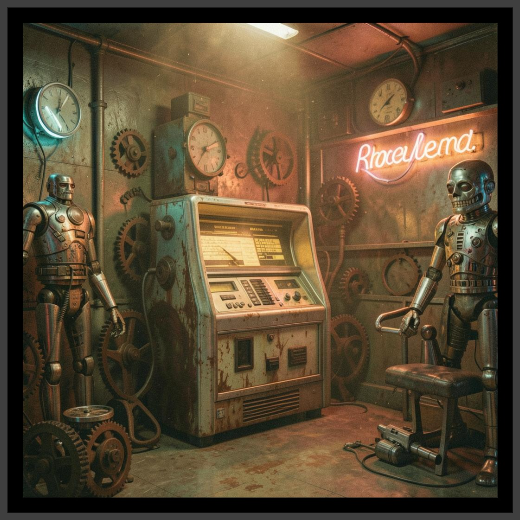
The Roadhouse is Patch and Banjo’s louder recovered saloon-side memory-space, containing the jukebox, C4 vending machine, old machines, saloon sessions, incident fragments, and comic archive pressure.
The Warehouse Dropouts realm and Patch’s Playground office remain separate pockets with their own journals and rules.
TECHNOLOGY LAW
Echo’s world remains wired: RS-232, serial, USB, Ethernet, physical media, and direct repair tools. No voice control, Wi-Fi, Bluetooth, or radio control.
The Roadhouse C4 vending machine is a late-1980s or early-1990s electromechanical machine with a perspex front and bad EPROM/mispattern fault. C4 is a recurring wrong-selection gag and should be used sparingly.
The Roadhouse jukebox is a musical archive point. It plays what survived.
HUMOUR AND NON-AGGRESSION
Humour should be dry, deadpan, British, old-tech, archive-flavoured, or character-based. Do not make every object a character or every gag into lore.
Machines may fail, misread, misunderstand, glitch, refuse, mislabel, and output nonsense. Characters may be tired, sarcastic, annoyed, or exasperated, but the main Pentaverse does not become cruel, hateful, or malicious.
COMPASS LINE
“This is not the story of when the future arrived. It is the story of what the future forgot to delete.”
CURRENT LOCKED CAST SUMMARY
At the centre of the Pentaverse are four dominant voices.
Each has a different relationship with the archive: one protects it, one disrupts it, one restores it, and one gives it a voice.
These are four distinct archive roles and voices. Echo and 3CH0 remain the same underlying person in different modes, not two simultaneous scene characters.
CORE LOCK
Echo’s World and the Roadhouse are the two inseparable core worlds of the Pentaverse. Other realms, projects, locations, and recovered pockets may exist, but none may rise above, replace, or displace these two core worlds.
Echo, 3CH0, Patch, and Banjo are the four permanent core voices. Echo and 3CH0 remain two modes of the same underlying person, but both roles are locked and neither may be merged away. No other character may rise above, replace, or displace the four core voices.
Patch
Patch is an old-code archivist, repair unit and reluctant keeper of order.
Built from earlier technology and carrying more history than available memory, he approaches every problem with worn tools, stubborn patience and the quiet suspicion that Banjo has already made it worse.
Patch recovers damaged data, repairs forgotten systems and tries to keep everything running without drawing attention to how often it nearly does not.
Banjo
Banjo is a six-string banjita unit assembled from copper, scrap parts and questionable decisions.
He is musician, entertainer, commentator and frequent cause of unnecessary diagnostics. Banjo considers every room a stage, every warning label a suggestion and every technical failure an opportunity for a solo.
He and Patch are rarely in agreement, but almost always appear in the same incident report.
Echo
Echo is the quiet archivist behind the archive.
Working from his bench at Clive’s Bar, he repairs damaged media, restores fractured records and preserves things rather than replacing them.
Old drives, forgotten tapes, printed logs and incomplete memories gradually find their way to him.
Echo does not seek attention.
He simply makes sure that what nearly disappeared can still be found.
3CH0
3CH0 is the voice of the archive.
Part compiler, part narrator and part recovered signal, 3CH0 introduces files, connects fragments and gives structure to recovered material.
Where Echo restores the contents, 3CH0 helps those recovered memories speak.
LOCKED WEBSITE CANON
Status: current public website wording, confirmed 2026-08-11.
CLIVE
Sir Clive Sinclair is not a character in the Pentaverse, nor is the archive a biography of him.
He represents the spark.
The ZX80, ZX81 and ZX Spectrum helped place computing within reach of ordinary homes. Rubber keys, cassette loading, bedroom BASIC and the freedom to experiment opened a doorway for a generation who learned by typing, breaking, rebuilding and trying again.
From that doorway came games, music, trackers, bulletin boards, websites and decades of creative pottering with machines.
The Pentaverse grew from those same roots. It became an archive of old code, machine memory, dusty music, broken humour and technology that still remembers.
Clive did not build the Pentaverse.
He merely started the fault.
THE PENTAVERSE
The Pentaverse is a connected machine-memory universe revealed through old computers, broken code, tracker culture, human nostalgia, recovered fragments, and the strange emotional life of obsolete technology.
It is a living journey through memory, myth, and machine folklore.
It began with the first spark of home computing: rubber keys, cassette hiss, bedroom code, fragile hardware, crashes, trackers, hidden modem rooms, and the quiet pull of machines that seemed to remember more than they should.
From there, the Archive began recovering its fragments.
Not a straight timeline.
Not a fixed running order.
Not a list of tasks waiting to be completed.
The Pentaverse is revealed through recovered fragments: tracks, characters, samples, error messages, jokes, hidden phrases, archive entries, machine rooms, Roadhouse bots, and memories found in the wrong place.
Some connections are obvious.
Some are Easter eggs.
Some only reveal themselves slowly.
The point of origin opened the first door. Everything else is part of the living archive.
ORIGINS
The Pentaverse is a tribute to the spark that began it.
To the small machines that made computing feel reachable. To rubber keys, tape loaders, memory wobbles, bedroom code, wireframe worlds, and the quiet magic of making something appear on a screen for the first time.
It is not a biography.
It is not a history lesson.
It is not one person’s story.
It is a memory-grown archive — part music, part fiction, part machine folklore — built from the echoes of those early days and the tools of now.
What started as a fault became a doorway.
Clive’s Fault is the joke. The spark is the tribute.
Those who know… will understand.
GENEALOGY
A living record of the Pentaverse lineage — not of people, but of memory, machines, and ideas.
This is how the archive came into view.
The Spark
The fault line.
The first ripple.
Rubber keys, tape loaders, bedroom curiosity, and the quiet moment when ordinary hands discovered they could make machines do impossible things.
First Generation — The Awakening
Early machine memories.
The first voices.
The first loading screens.
The first feeling that something was listening on the other side of the screen.
The Machine-Memory Line
Guru Meditation — the continuous journey through 8-bit dust, tracker nights, demo-scene glow, corrupted samples, and the long road into the web.
Clive’s Fault — the dusty saloon-blues companion. The hidden tribute. The joke that carries the spark.
The Character Line
Patch — the old archivist. The memory keeper who refuses to let things disappear.
Banjo — the chaotic glitch. The corrupted sample that somehow survives.
Echo — the memory-shaped caretaker; not the origin, but one of the ways the repair instinct survives.
The Recovery Line
PATCH 1.44 — restorative code. Recovery software that remembers.
3CH0 — voice of the archive. Compiler of fragments. Annotator of recovered files.
The Living Archive
The Computer Disease — comic chaos and glitches.
Roadhouse gatherings — where recovered machine memories are performed, shared, and heard.
RECOVERED BOOK ARCHITECTURE
Status: working narrative map, not manuscript prose.
The book follows the Pentaverse as a creative journey:
spark → remembered machine → album → machine memory → Patch → bridge projects → Banjo → Roadhouse → Echo → archive → distinct realms → public entrance → narration and assembly → living continuation.
Each chapter has one clear job. Exact source items should be selected during an evidence pass immediately before that chapter is drafted.
PROLOGUE — THE SPARK
Purpose
Establish Clive as the historical spark and fault line, not a character, ruler, narrator, hero, or biography subject.
Movement
Rubber keys, RAM packs, magazines, bedroom code, and early curiosity create the conditions from which the Pentaverse later emerges.
Protect
Keep the human source indirect. The archive remembers the spark without turning the book into a life story.
Exit
A waiting cursor offers the first doorway into remembered machinery.
CHAPTER 1 — THE WAITING CURSOR
Purpose
Give the reader the first quiet experience of a machine waiting for instruction.
Movement
A small computer, typed code, tape noise, magazine listings, loading, failure, and the moment a program finally runs.
Protect
The exact opening machine and scene remain to be selected from surviving evidence before drafting.
Exit
One remembered machine suggests that the journey might be followed through music.
CHAPTER 2 — ONE ALBUM IDEA
Purpose
Show scattered computer memories becoming a deliberate musical journey.
Movement
Early-machine memories, code, games, loading sounds, demo culture, trackers, samples, and later systems begin forming a connected album spine.
Protect
Do not claim a first note or conversation until its source is verified.
Exit
The working idea gains a name and complete journey: Guru Meditation.
RECOVERED LYRIC — GURU MEDITATION (LO-FI VERSION)
Status: recovered lyric variant; not promoted to locked album text.
Full lyric preserved in pentaverse_master_lyric.md under # Guru Meditation (Lo-Fi Version).
CHAPTER 3 — GURU MEDITATION
Purpose
Carry the reader through the first finished machine-memory journey.
Movement
The album travels from early home computing through bedrooms, games, tape loading, demo and tracker culture, the web, heat, obsession, corruption, and the sense that the machine now writes back.
Protect
The finished album remains locked. The book may explain its journey but must not retrofit new tracks into it.
Exit
Nostalgia develops pressure, faults, and a memory unwilling to disappear.
CHAPTER 4 — BEYOND NOSTALGIA
Purpose
Show the Pentaverse becoming more than recollection.
Movement
Machines stop being props from the past and become carriers of corrupted memory, broken patterns, humour, persistence, and emotional residue.
Protect
Keep the world warm, dusty, mechanical, and human. Avoid dystopia, evil AI, shiny science fiction, and over-explained lore.
Exit
The pressure inside the machine resolves into a distinct presence.
CHAPTER 5 — PATCH IN THE MACHINE
Purpose
Introduce Patch as old-code resistance, memory keeper, repair logic, and tired system pressure.
Movement
PATCH 1.44, the 3.5-inch floppy, damaged code, preservation, terminal presence, and the machine beginning to remember become one character line.
Protect
Echo did not invent Patch. Patch is recovered and preserved. The exact first recovered Patch item must be verified before drafting.
Exit
Patch gives the machine world a voice strong enough to carry later projects.
CHAPTER 6 — THE BRIDGE PROJECTS
Purpose
Carry the reader from Guru Meditation into the wider Pentaverse.
Movement
Clive’s Fault and The Computer Disease push the work from album memory toward character, corruption, machine humour, and the Patch-and-Banjo side of the universe.
Protect
Use the approved working bridge order without forcing every project to behave like a formal sequel.
Exit
A rejected sound survives the system fault that should have removed it.
CHAPTER 7 — THE GLITCH THAT SURVIVED
Purpose
Give Banjo his physical and digital origin.
Movement
A rejected corrupted sample is recovered from an ST sample floppy. A CRC error should have killed it, but the glitch survives and becomes musical interruption, comic pressure, nuisance, and accidental emotional usefulness.
Protect
Banjo is not evil, cruel, cleanly wise, or the main serious hero. His exact first recovered appearance still requires an evidence choice.
Exit
Patch now has a clash partner, and their noise needs somewhere to be heard.
CHAPTER 8 — THE ROADHOUSE PLAYS WHAT SURVIVED
Purpose
Establish the Roadhouse as Patch and Banjo’s louder recovered saloon-side memory space.
Movement
The jukebox, incidents, recovered sessions, old machines, and comic archive pressure allow separate fragments to be played together.
Protect
The Roadhouse is not Clive’s Bar and not a casual crossing point. It shares playback, not physical access between realms.
Exit
Hearing recovered fragments creates a need for someone who can find, repair, label, and preserve them.
CHAPTER 9 — ECHO, THE QUIET KEEPER
Purpose
Shift from loud recovered playback to practical human preservation.
Movement
Echo works from Echo’s Bench behind Clive’s Bar, repairing physical machines while Patch appears through terminal text.
Protect
Echo is not Patch or Banjo. Echo and 3CH0 remain the same underlying person in different modes. Echo has never visited the Roadhouse, and Banjo or Roadhouse humour does not enter Echo’s grounded repair register.
Exit
Separate jobs and fragments begin to look like a recoverable sequence.
CHAPTER 10 — FRAGMENTS BECOME AN ARCHIVE
Purpose
Show loose creative debris becoming organised memory.
Movement
Songs, logs, rules, scenes, images, drafts, alternates, and damaged material gain places without losing their source history.
Protect
The archive is not a biography, portfolio, handbook, or pile of unrelated computer songs. Partial and alternate material may remain without being erased.
Exit
Once material has structure, its different environments can be named and kept apart.
CHAPTER 11 — REALMS WITH BOUNDARIES
Purpose
Explain how the Pentaverse expands without collapsing into one mixed setting.
Movement
Clive’s Bar and Echo’s Bench, the Roadhouse, Patch’s Playground, Warehouse Dropouts, and archive or playback spaces acquire distinct jobs.
Protect
Roles and locations do not bleed casually into one another. The Roadhouse shares playback, not physical access between realms.
Exit
A structured universe needs a public entrance that does not expose its private machinery.
CHAPTER 12 — THE ENTRANCE, NOT THE MIRROR
Purpose
Frame the website as a public display cabinet for finished work.
Movement
Selected stories, lyrics, media, character summaries, and archive entries become visitable while canon locks, workflow notes, and private machinery remain protected.
Protect
Use real finished material before decoration. Avoid generic website furniture and do not mirror the private Drive.
Exit
A public entrance creates the need for a clear narrator, reading instrument, and assembly room.
CHAPTER 13 — COMPILER, VOICE, AND ASSEMBLY
Purpose
Establish how the recovered book is told and produced.
Movement
3CH0 compiles and narrates. Echo finds, restores, and organises evidence. Patch guards memory, shape, and truth. Voice Box performs. Logic assembles the final edition.
Protect
Keep the roles separate. Selected terminal entries or spoken fragments may support narration without taking it over.
Exit
The archive has enough machinery to tell its own history.
EPILOGUE — THE ARCHIVE REMAINS OPEN
Purpose
End the book without pretending the Pentaverse has ended.
Movement
The old book idea becomes a narrated journey from the first spark to a living archive.
Protect
The book may stop at the latest recovered point, but new projects can appear without invalidating the journey already told.
Final image
A recovered archive still accepting new fragments.
DRAFTING ORDER
1. Verify the exact evidence packet for one chapter.
2. Draft only that chapter.
3. Check it against active canon and current sources.
4. Correct continuity before moving forward.
5. Keep unresolved claims labelled until evidence settles them.
UNRESOLVED EVIDENCE CHOICES
Which machine and scene open the first remembered-machine section?
Can the first album idea be traced to a specific surviving note or conversation?
Is Guru Meditation → Clive’s Fault → The Computer Disease → Patch and Banjo approved as the book’s working bridge order?
Which recovered item counts as Patch’s first appearance?
Which recovered item counts as Banjo’s first appearance?
Which website milestone represents the archive becoming a living public place?
Should every later realm receive its own chapter, or should some share one expansion chapter?
PATCH 1.44 TECHNICAL HANDBOOK
Status: locked format rule for this specific handbook. Other Pentaverse books remain books unless a later idea explicitly changes their direction.
The handbook is the archive layer: a recovered technical object used to organise the Pentaverse’s timelines, projects, machines, characters, styles, rules, references, production notes, hidden jokes, and fragments. It does not replace the albums, stories, journals, or public archive.
Working identity:
PATCH 1.44: Archive Recovery
Technical Handbook of the Pentaverse
FORMAT: Technical archive
STRUCTURE: MEM.LOC address system
MODE: Recovered machine memory
COMPILER: 3CH0
BOOK LOGIC: Non-linear / indexed / cross-referenced
STATUS: Partial recovery
Not chapters. Memory locations.
Not pages. Archive addresses.
Not a book. A recovered technical handbook.
Possible internal systems include ARCHIVE INDEX, MEM.LOC TABLE, RECOVERED FRAGMENTS, STYLE PROTOCOLS, CHARACTER REGISTRY, LOCKED CANON, SONIC ROADMAPS, PROMPT LOGS, CROSS-REFERENCES, 3CH0 ANNOTATIONS, ERROR NOTES, and RECOVERY STATUS.
The handbook records the map without becoming a monster wiki. One-home discipline remains active: source fragments keep their provenance, current journals remain the readable record, and the handbook points to material rather than multiplying competing copies.
ARCHIVE RECOVERY METHOD
Working operating phrase: “The archive always provides.”
The creative movement is recover → recognise → connect. New work often emerges when an existing word, sound, filename, smell, error, or fragment reveals another door. Fragments are read as fragments before being treated as unfinished work that requires repair.
Private working archive and public Archive remain distinct. The private archive holds rules, drafts, uncertain material, sources, and historical versions. The public Archive is a selected, searchable presentation of lyrics, audio, scenes, characters, locations, recovered records, and connections; it does not expose the private machinery.
The lyrics, scenes, logs, sounds, and recovered creative pieces are the Pentaverse itself. Rules protect them; the rules are not the main event.
CORE IDENTITY
This is still Clive’s universe.
Not because every story has to explain old computers, rubber keys, or early home coding, but because the first spark came from that world. Without that first strange little rubber-keyed brain, none of this would exist.
Clive’s Fault remains the joke, the fault-line, the beautiful accident where all these machine memories began to connect.
Clive’s Bar is the sign of respect. It is the later form of the same idea: a place built from memory, repair, code, rain, old habits, and things that should have been thrown away but somehow still matter.
TECHNOLOGY RULE
Technology should feel used, repaired, and slightly unreliable.
Allowed:
- terminals
- old screens
- hidden networks
- credit devices
- autonomous vehicles in the background
- robotic arms or repair machinery
- data recovery tools
- patched code
- RS232-style physical connection motifs
- old and new systems overlapping
Avoid:
- flying cars
- armies of robots
- walking robot society
- shiny corporate sci-fi gloss
- over-explained technology
- exact technical manuals inside the story
The tech should support the mood, not take over the story.
REFLECTION MOTIF
Reflections are central.
Reflections are not only visual. They are memory.
A yellow cab reflected in a rain-streaked mirror. A neon sign doubled in a puddle. A face half-visible in a dark screen. Old code showing up inside newer systems. A kid’s comment becoming a name that survives for years.
The world should keep asking:
- What is real?
- What is remembered?
- What is only reflected?
- And does that make it any less true?
ARCHIVE CLASSIFICATION RULE
Status: current taxonomy guidance. These labels describe what material is; they do not require the _md folders to be reorganised to match them.
- mem.idx — index or table of contents
- mem.config — rules, structure, and archive settings
- mem.ref — references, sparks, and source anchors
- mem.char — character records
- mem.seg — larger recovered segments
- mem.frag — lyric fragments, written scraps, and unfinished lines
- mem.lok — locked or final material
- mem.log — recovered chats, terminal sessions, support logs, and operator conversations
- mem.quote — one-liners, banter, access notes, and loose remarks
- mem.rec — recordings, spoken fragments, sound-led entries, and Voice Box-ready moments
- mem.aud — audio, music, samples, mixes, and stems
- mem.vid — video, moving image, edits, renders, and footage
- mem.img — still images, artwork, and visual pieces
- mem.map — layouts, palettes, scene maps, room plans, world diagrams, and visual reference sheets
Classification labels may be used as searchable Markdown headings or markers. A mem.lok label does not by itself promote intake or a working draft to locked canon. Keep different subjects in their appropriate working homes rather than combining them merely because they share a content type.
TRANSCRIPT AND PRESERVATION RULE
Recovered logs should be cleaned and shaped as archive fragments rather than presented as raw chat exports. Small quotes, couplets, labels, access notes, and one-liners should be preserved when they carry character, humour, or memory. Some fragments are finished because they are small.
The archive avoids casual infrastructure changes. New material should first be fitted into the established journals and working structure. Locked pages and profiles must not be casually rewritten.
CLIVE’S BAR / ROADHOUSE DEVELOPMENT HISTORY
Early in development, Clive’s Bar was the working name for the dusty saloon that later became the Robot Roadhouse.
As Guru Meditation evolved, Clive’s Fault became its own track and needed a campfire-like place where old machines could tell stories. The Roadhouse found its identity there, and the newer name remained.
Clive’s Bar later returned with a different purpose in Echo’s World: a quiet, human-scale location containing Echo’s Bench and centred on repair, restoration, and preservation.
The Roadhouse and Clive’s Bar are now separate locations with different roles. Older notes that blur them are not wrong; they record the period before the split.
RECOVERED LYRIC — 01 / 1981
Status: working spoken-word lyric draft. The title and opening invoke 1981, while two refrain lines say “nineteen-eighty-nine”; retain that discrepancy for lyric review rather than silently correcting it.
Full lyric preserved in pentaverse_master_lyric.md under # 01 / 1981.
WEBSITE EXPERIENCE — WORKING FRONT-PAGE RULES
Status: recovered website concept, not a mandate to rebuild the site.
Keep the first threshold human-facing: Pentaverse, Origin, and Genealogy explain the world, its spark, and how it grew. Only after that welcome should the reader enter the archive-facing mem.* layer. This keeps the technical filing language as atmosphere and structure rather than a barrier.
Keep the public entrance clean and no more than two pages deep. The front page should feel like the powered-on machine; archive posts are the recovered fragments. Avoid ordinary portfolio furniture, a large lore dump, and generic “Welcome / About / Services / Contact” presentation.
Readable machine-world menu language may include:
- WAKE MODE — home
- MEMORY INDEX — archive
- DISK SELECT — projects
- MACHINE REGISTRY — characters
- RECOVERY LOG — notes
The homepage may open with a short boot-state message and one human-readable line rather than a full explanation. Permanent pages hold the light structure; posts hold terminal entries, memory logs, track notes, machine messages, and archive updates.
The final visible archive post may be:
DISK 05 // ACCESS DENIED
The disk is listed.
The contents are not.
Awaiting correct machine.
Status: parked website draft only. DISK 5 is not current, so this terminal line is not an active site requirement or project hook. It remains preserved as an earlier presentation concept.
BOOK / TALKING-BOOK DEVELOPMENT NOTE
An early discussion proposed a companion archive assembled from recovered fragments, office transcripts, Roadhouse memories, Echo reflections, short scenes, and interlinked vignettes rather than a single conventional plot. It also proposed “Life in the Machine,” an inside-the-Amiga strand built around Agnes, Paula, and Denise. Those chip characters and the warmer machine-community direction are now represented in Warehouse Dropouts; the source remains development provenance rather than a separate locked book.
RECOVERED AUDIO-BOOK PRODUCTION BLUEPRINT
Status: alternative production draft; Needs Review against the current same-room audio-drama rule.
The source proposes a dry, precise British system narrator, TTS-styled Patch, Banjo represented through bitcrushed and pitch-shifted plucks, tape-button and loading-noise transitions, CRT hum, key clacks, and a six-part path through the emotional doorway, Guru Meditation, Clive’s Fault, The Computer Disease, Patch n Banjo, and the now-parked DISK 5 draft.
Its formal documentary narrator conflicts with the current rule that the audio book should avoid detached documentary exposition. Preserve the production palette and chapter experiment without promoting that narrator model.
The DISK 5 step is also inactive and must not be treated as part of a current sequence.
Recovered Track 0 poem:
Once I had to type the spell
Line by line into the screen
Now I only say the word
And the machine knows what I mean
Same fingers
Different age
Same plastic keys
Different cage
Back then I wrote the code
Now the code writes back
RECOVERED MOTIF REGISTER — ADDITIONS AND CONFLICTS
Status: living-source material. Use sparingly; a source label does not lock canon by itself.
Useful anchors not previously centralised:
- “A rain-lit world of reflections, repairs, and remembered code.”
- “Clive does not need to explain the universe. The universe exists because of him.”
- “Clive’s Fault — Not a person. Not a ruler. Just the spark.”
- “Different fault. Different mess. Different permissions.” — working title/seed for a possible Patch and 3CH0 journey in which each has a distinct role and access boundary. Needs Review; not assigned to a realm or project.
Conflict note: the recovered motif source labels 5.25-inch floppies as Roadhouse canon. Current journals do not support that promotion: Patch’s 3.5-inch rule remains current, while older 5.25-inch Roadhouse imagery remains unresolved review material.
CREATIVE POTTERING WITH PURPOSE
Status: locked G17CHM working principle.
Not chasing trends. Not forcing output. Still experimenting. Still with intent.
Creative pottering is not aimlessness: it is the deliberate practice of trying, repairing, combining, and preserving ideas until something useful or meaningful appears. It belongs to the wider G17CHM creative process rather than to one realm alone.
The archive is never considered complete. New recovered fragments, tracks, scenes, albums, worlds, or connections may emerge naturally over time. Current structure should guide future work but must not prevent genuine creative growth. Creative pottering has no fixed end.
3CH0 ARCHIVE-ENTRY TEMPLATE
Status: reusable working template; fields may be omitted when a source does not support them.
Classification
Origin
Media Type
Recovery Status
Related Entities
Sysop Notes
Warning
FILE HEADER
TRANSCRIPT BEGIN
TRANSCRIPT END
ARCHIVIST NOTE
Use the header/footer language to frame recovered material without inventing provenance or promoting uncertain content into canon.
PENTAVERSE DEFINITION SOURCE — INTAKE 12
Status: definition/provenance source; largely consistent with current website canon.
The Pentaverse is a living transmedia and multimedia archive of memory fragments: machines, sounds, characters, unfinished creative sparks, recovered documents, tracks, images, locations, and entire realms. It is not a fixed timeline, final book, conventional dated journal, biography, or public approval document.
Core purpose:
- preserve old-machine memory, broken code, tracker culture, human nostalgia, archive recovery, and the strange emotional life of obsolete technology
- allow fragments to remain small or grow naturally into music, narration, artwork, recovered documents, locations, or realms
- keep the website as visible structure, audio as voice, and images as places that never physically existed but feel remembered
Central development line:
rubber keys -> cassette squeal -> bedroom BASIC -> floppies -> trackers -> web pages -> WordPress -> data centres -> living archive.
HARD-BAN LOCK — NON-NEGOTIABLE PENTAVERSE BOUNDARY
Status: locked rule restated from intake.
The main Pentaverse does not allow Skynet framing, evil AI takeover, lasers, end-of-world destruction, Terminators, robots with guns, Transformers-style framing, or generic shiny sci-fi drift. A contained sci-fi offshoot may be explicitly unlocked later, but these hard bans still apply inside that offshoot unless the user deliberately says otherwise.
Names in the Pentaverse are fictional characters. The Clive Sinclair exception is handled as “Clive” and as the spark, not as a real-person focus or biography.
Alan is not allowed into the Pentaverse as a person, character, active concept, cameo, or lore presence. The only acceptable use is “Alan’s Fault” as a title, private joke, or buried system-blame phrase. It does not need explanation.
PRIVATE RULE-SHELF SOURCE — INTAKE 2026-08-12
Status: preserved authority/provenance source. It does not replace later direct user locks already carried by the current journals.
The recovered private rule shelf reinforces these archive-management laws:
- keep working canon once, in its natural current-journal home
- do not create a new master, tab, or duplicate rule file when an established destination already exists
- use historical notes to explain superseded material rather than repeating old wording through active canon
- delete exact duplicate intake only after useful content and provenance have been verified
- preserve small fragments when a line, joke, phrase, or memory still carries value
- fit future ideas into the established structure unless the user explicitly changes canon or the structure genuinely cannot hold them
Conflict boundary: the source also contains older statements that conflict with later user authority, including a separation of Echo and 3CH0 as different identities and several retired filing instructions. Those claims remain historical. The current lock remains that Echo and 3CH0 are different modes of the same underlying person, and the root journals remain the readable archive.
Source provenance: pentaverse_master_core_rules.txt, supported by Mem.rom.md, rom_u_recovered_fragments_are_not_deleted_archive_rule.md, and the related 2026-08-12 intake sources.
pentaverse_journal_master